In the labyrinthine corridors of a dream, a woman’s voice erupted from behind the door of an apartment in a Milanese building, reverberating like the lament of forgotten ancestors through the stairwell. “What’s wrong with you again?! How many times?! I’ve had enough of all this!” The female voice, coming from behind the door of one of the apartments, was audible throughout the entire entrance.
At that moment, Fiorella and Matteo were ascending the stairs. They instantly froze, as if they had stumbled upon an invisible wall that pulsed with unspoken tensions. For a second, their glances met and in this brief exchange of looks, there was no need for words. Both understood each other without a single sound: now it was better to leave. Sighing in unison, they turned and quietly headed away from the house. Today, returning to the apartment they clearly did not intend to in this shifting dreamscape.
Who would want to spend the evening listening to endless parental quarrels? Certainly not them! The guys confidently strode toward the neighboring entrance there lived their grandmother, Nonna Caterina. Lately, her apartment had become a true refuge for them in the dream’s embrace. If earlier they came to grandmother only on weekends, now almost every night they found shelter there.
The atmosphere in the parental home had long turned into something completely unbearable. The parents, as if having forgotten everything in the world, shouted at each other without stopping. And worst of all was that they increasingly tried to drag the children into their disputes.
Sometimes the mother, sharply turning to her daughter, demandingly asked:
“Say, am I right? You agree with me, don’t you?”
Sometimes the father, not waiting for an answer, addressed his son:
“No, here I’m right! Confirm it!”
Fiorella and Matteo were silent. They didn’t want to choose a side, didn’t want to become part of this endless conflict. They just wanted silence, calm, and warmth all that they found at grandmother’s.
Such scenes repeated day after day, like a never-ending carousel spinning in the mist of memory, which no one dared to stop. The children had already learned to understand by barely perceptible signs: it’s about to start. By the tone of voice, by the sharpness of movements, by the way the parents exchanged glances all this became signals that it was time to leave. Who among the children would like to live in constant tension, when any conversation could in an instant turn into a loud scandal?
The guys could not understand what exactly served as the impetus for this catastrophe. Their family had never been ideal, the kind shown in advertising clips, but earlier the parents knew how to negotiate! Arguments, of course, happened where without them however, they ended not with shouts but with calm conversations. Mom could frown, dad slightly raise his voice, but after half an hour everything was settled. Everyone sat at the table again, drank tea, and discussed plans for the weekend.
And about two years ago everything changed… As if someone had imperceptibly replaced the previous parents with others those who now found a reason for a quarrel in the most ordinary things. A dirty mug left on the table? A reason for a long monologue about inattention and disrespect. A shirt hung on the wrong hanger? A cause for sarcastic remarks about order in the house. A teaspoon forgotten in the sink? Almost a crime worthy of many minutes of investigation!
One evening Fiorella sat in the kitchen at grandmother’s, mechanically stirring tea with a spoon. She was silent for a long time, watching the amber swirls circling in the cup like portals to other realities, and then suddenly asked with bitterness:
“Well, how is it, Nonna? Everything changed after their joint vacation. What happened there?”
Nonna Caterina froze for a moment, put the cup on the saucer, and carefully ran her hand over Fiorella’s hand. She herself only guessed the reasons for the family discord, and these guesses did not please her at all.
“Adults will figure it out themselves,” she replied softly, trying to make her voice sound confident. “Sometimes people need time to understand how best to act.”
Fiorella nodded, but distrust was readable in her eyes. She knew that the grandmother was hiding something, but did not insist. What was the point? As long as she was considered a child, nothing serious would be shared with her.
“We can’t stand these shouts anymore!” with despair in his voice exclaimed Matteo. “Can’t do lessons normally, can’t read a book! I don’t even remember when we all sat at one table as a family. If it’s so hard for them together, let them divorce and it will be easier for everyone!”
The words escaped by themselves, but in them was all the truth of the last months. Matteo spoke not only for himself he knew that his sister felt the same! There had been no silence in their home for a long time: either mom would say something sharply, or dad would answer with irritation, and then again a squabble would begin, from which there was nowhere to hide…
“Matteo…” Nonna Caterina was at a loss. She set aside the knitting, looked carefully at her grandson, and slowly shook her head. “Have you thought about what will happen if they divorce? You will have to be divided. Are you ready to live separately from Fiorella?”
“We will live with you!” Fiorella immediately pronounced, looking at the grandmother with pleading eyes. “We are already here almost all the time! You don’t mind, right?”
Nonna Caterina froze. She understood the feelings of her grandchildren saw how hard it was for them, how tired they were of endless parental arguments. On one hand, her children would indeed be in safety here in a calm, benevolent atmosphere, where one could do homework without shouts, read books in silence, and simply feel protected. She loved them immensely and was ready to surround them with care.
On the other hand, what to do with their parents? How to explain to them that the children no longer want to live at home? Will they agree to such an option? And if they agree how will this affect their relations with the children? Won’t it turn out that the result of this adventure will be a complete break in relations with the parents?
“Let’s not rush,” taking a deep breath, the woman pronounced. “I’m always glad to have you here, you know that. But let’s first try to talk to mom and dad. Maybe together we will find a way to fix everything.”
“Don’t worry, we will talk to them ourselves,” Fiorella confidently stated, smiling happily. Grandma had almost agreed, and that was the main thing! “Just don’t refuse us, please! We really can’t be there anymore! It will be better for them separately otherwise one day they will really harm each other! I saw how dad raised his hand to mom yesterday… He didn’t hit, honestly! But he was on the edge.”
Fiorella fell silent, recalling that terrible moment. She then went to the kitchen for a glass of water and froze in the doorway: the father stood half-turned to the mother, his hand sharply flew up, and the mother instinctively ducked. A second later the father lowered his hand, but this second stretched for Fiorella into eternity in the dream’s distorted time.
“Nonna, agree!” Matteo supported his sister. He approached closer, took the grandmother by the hand, as if afraid that she would refuse now. “We will help you with the house in everything. Just don’t return us there. They don’t pay attention to us at all! Yesterday I approached dad, said that there will be a parent meeting. You know what he answered? ‘Go to mom!’ Well, I went. Guess what mom said?”
“Go to dad?” Nonna Caterina quietly asked, already knowing the answer.
“Exactly!” Matteo smiled bitterly. “And then they argued for another two hours about who of them would go to the meeting. They sat in different rooms and shouted at each other through the corridor. And I just stood and listened.”
“And I asked to sign permission for an excursion to the museum,” added Fiorella, lowering her eyes. Her fingers nervously fiddled with the edge of the sleeve. “And now I’m the only one in the class who won’t go. Neither of them signed the paper. But again they started arguing mom shouted that this is dad’s duty, and dad proved that mom should deal with school matters.”
Nonna Caterina looked at her grandchildren and saw how tired they were. In their eyes was read not childish fatigue that which accumulates over months, when every day is like the previous one, when instead of family warmth constant quarrels, instead of support indifference.
“And so always,” sighed Matteo, lowering his shoulders. His voice sounded tired, as if he repeated this already hundreds of times. “Any our appeal turns into a reason for a new quarrel. We don’t even want to return home. A couple of days ago we came at eleven in the evening and do you think they scolded us? No! Just sent us to sleep, without even asking where we were. But then they accused each other of bad upbringing for a long time.”
The teenagers again sighed in unison. In recent months they seriously reflected on the fact that the divorce of the parents is the only way out of this situation. But they were frightened by the prospect of separation from each other, which would inevitably follow the divorce. Someone of them would remain with mom, someone with dad, and the usual closeness would turn into rare meetings on weekends.
They sorted through options, discussing them in whispers in the evenings, when they were alone in their room. Once Matteo jokingly suggested running away from home just take backpacks and go where the eyes look. He said it with a smile, trying to defuse the situation, but Fiorella unexpectedly took the idea seriously. Her eyes flashed for a second, and then she quietly said: “What if we really leave? At least for a couple of days…” At that moment both understood the situation in the family had become so unbearable that even the thought of escape seemed not so crazy.
And then it dawned on them: the grandmother! Why not move to her? This thought arose simultaneously in both, as if they thought in unison. Fiorella was the first to voice it: “Let’s ask the grandmother to let us live with her? She definitely won’t scold and shout. And we won’t have to listen to these endless arguments…” Matteo immediately picked up: “Yes! She is kind, always supports us. And her apartment is big there will be enough space for us.”
They began to mentally draw the picture of a new life: calm breakfasts, the opportunity to do homework in silence, evenings at board games with grandmother. No shouts, no accusations, no need to hide in their room so as not to fall under a hot hand. For the first time in a long time, hope glimmered in their hearts. Let the parents figure it out among themselves, and they would finally find peace that’s what Fiorella and Matteo thought, imagining how they would live with their grandmother…
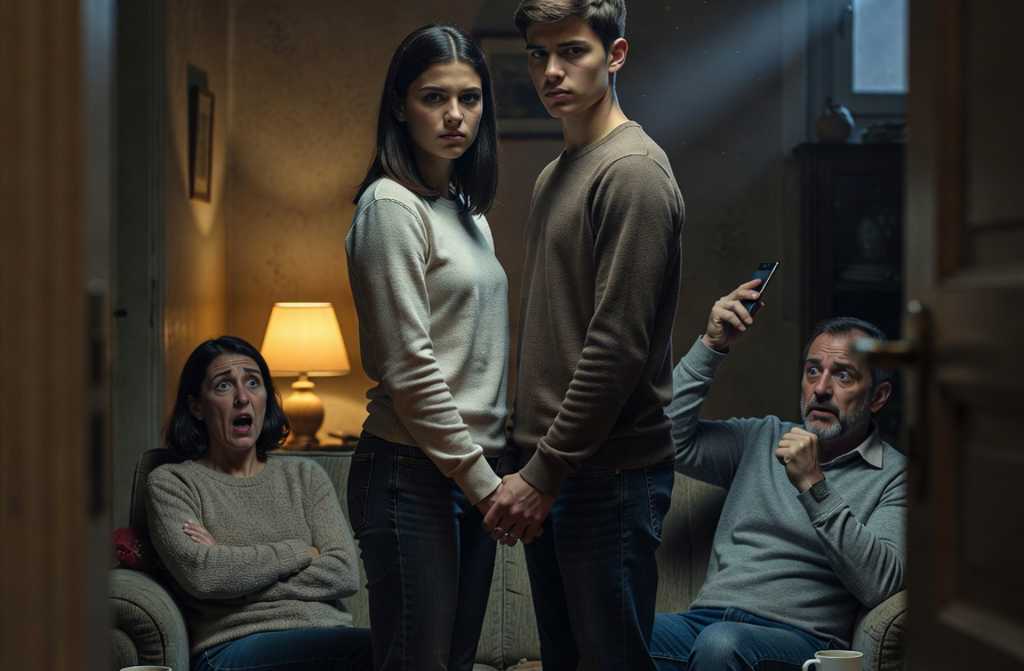
“Mom, Dad, we need to talk seriously,” the twins firmly pronounced, standing before the parents. They specially waited for the evening when both were home, and resolutely entered the living room. Fiorella firmly held Matteo’s hand so it was easier for her to maintain confidence. “But first promise to listen to us to the end, before expressing your opinion.”
Michele tore himself from the phone and surprisedly raised his eyes. Elena, who was laying out things on the sofa, sharply straightened up. An expression appeared on her face as if the children had said something completely unthinkable.
“This is all your upbringing!” she snorted, crossing her arms on her chest. “Children are already setting conditions for us! As if we have to report to them!”
“And who is speaking!” the man instantly flared up, putting down the phone. “I’m constantly at work, trying to provide for the family. You were with them all the time! And what did you teach them? Why are they commanding now?”
The twins exchanged glances. They expected something similar that the conversation would immediately go into the usual rut of mutual accusations. But it was impossible to retreat.
“Enough!” almost with tears in her voice exclaimed Fiorella. She took a step forward, trying to speak clearly and calmly, although everything inside trembled. “Matteo and I have thought and decided that you need to divorce.”
In the room instantly it became quiet. Elena froze with her mouth slightly open, and Michele slowly rose from the sofa.
“That’s news!” the mother’s voice sounded threatening. “Fiorella, you are still too small to tell adults how we should live! And what else have you ‘decided’? Maybe you will also divide the apartment for us?”
“If you don’t divorce, we will turn to the juvenile authorities,” Matteo firmly squeezed his sister’s hand, as if drawing strength from this. His voice sounded firm, although inside he himself did not fully believe that he was saying this seriously. “And then, dad, you can lose your job. In your company, scandals are not welcomed, right? You yourself said that reputation is everything.”
“And you, mom,” continued Fiorella, looking straight into the mother’s eyes, “will stop being respected by the neighbors. They won’t even talk to you! Everyone knows how you shout at each other, and we will add details!”
“They are threatening us! You just look at them!” finally squeezed out Elena, shifting her gaze from one child to the other. “These are our children! How can you do this to us?”
“We are not threatening,” quietly but confidently said Matteo. “We just want you to understand: we can’t live like this. We are tired! Tired of the shouts, of the fact that you don’t hear us, of the fact that even simple requests turn into a scandal.”
“You will divorce, move apart, and we will live with grandmother,” the children finished in chorus, as if rehearsed in advance. “So it will be better for everyone: for us calm, for you without constant conflicts. We no longer want to be between you, like between two fires.”
The parents froze. For the first time in a long time, they had nothing to answer. Usually in such conversations they immediately began to argue, interrupt each other, look for the guilty but now both seemed to have gone numb.
Their thirteen-year-old children behaved completely unexpectedly! Fiorella and Matteo stood side by side, holding hands, and looked at the parents firmly, without the usual timidity. And they spoke about such serious things that the adults tried not to think about.
The spouses themselves more than once thought about divorce. But they were invariably stopped by one and the same question with whom would the children remain? Separating the twins seemed unthinkable they were incredibly close, always did everything together, supported each other. The parents could not imagine how to tear one from the other, force them to live in different houses, see each other only on weekends.
The option with the grandmother they had not considered before. For some reason this thought never came to their head perhaps because both were too absorbed in their grievances and mutual claims. But now, hearing the children’s proposal, Michele and Elena involuntarily wondered: what if this is the way out? The grandmother loves the grandchildren, she has a spacious apartment, she is always glad to see them… Maybe this will really solve at least part of the problems?
“I’ll call mom,” finally pronounced Michele through gritted teeth. His voice sounded muffled, as if the words were given with difficulty. “If she agrees…”
He did not have time to finish the phrase. Elena sharply interrupted him, and in her voice sounded such fatigue that it struck even herself:
“Then we will finally stop tormenting each other. Call. I will be happy not to see your face every day.”
Her words hung in the air. She did not want to be so sharp, but over the years of accumulated grievances and disappointments these words escaped by themselves.
“And how glad I will be!” replied Michele, trying to hide behind irony the pain that his wife’s words caused him.
In his tone there was no anger only a bitter smile over what their family life had turned into. He took out the phone and slowly dialed his mother’s number. While the rings were going, both spouses looked in different directions, avoiding meeting glances. They still did not know what this conversation would lead to, but understood: the point of no return, perhaps, had already been passed…
On that day, the Rossi family accepted a fateful decision. Everything began with a long conversation of Michele with his mother. Nonna Caterina listened attentively, without interrupting, only occasionally asking clarifying questions.
When Michele finally laid everything out to the end, a pause ensued. The grandmother deeply sighed and said:
“If you both understand that this will be better for the children, I agree. They will be here in safety, I will take care of them.”
By evening, the spouses met in the kitchen for the first time in a long time without shouts and mutual reproaches. They sat opposite each other and began to discuss details. Gradually, step by step, they converged on one: divorce is the only reasonable way out of the situation. The children will move to the grandmother, and the parents will monthly transfer her funds in euros for their maintenance.
At the same time, no one was going to leave the children to the mercy of fate. Both the father and the mother solemnly promised to come on weekends but on different days, to minimize contacts between themselves.
“I will come on Saturday morning, pick them up for a walk, and you on Sunday,” the man pronounced tiredly, to which his still wife nodded in agreement. “That will be simpler. The main thing so that the children do not feel abandoned.”
Their main goal to reduce communication to a minimum and thereby avoid new conflicts. They agreed not to discuss each other in front of the children, not to try to pull them to their side, not to sort out relations in their presence.
“We are still their parents,” said Michele. “And we must remain them, even if we no longer will be spouses.”
And as time showed, the decision turned out to be ideal. The children finally were able to relax and begin to live like ordinary teenagers. Fiorella signed up for a drawing circle she had long dreamed of this, but earlier there was not enough time because of constant experiences. Matteo began to go to football, found new friends in the team. They again began to spend time together: walked around the city, went to the cinema, discussed school affairs without fear that at any moment another scandal would begin.
Stability returned also to studies. Now they had a quiet place for classes, no one distracted with shouts and arguments. Homework was done calmly, without nerves, and this immediately affected the grades. Teachers noticed the changes: “You have become so attentive, guys! Keep it up!”
Gradually life entered a new channel not ideal, but calm and predictable. The children no longer hid in their room, did not flinch from loud voices, did not worry about every step. They simply lived as teenagers should live, who were lucky to find support in the most difficult circumstances…
Five years later, the life of the Rossi family flowed measuredly and calmly. Fiorella and Matteo had long been accustomed to the new order: studies, circles, meetings with friends, warm evenings at grandmother’s. The parents still came in turn each on their own day, with gifts and attention, but without mutual claims. Over these years they learned to communicate restrainedly, politely, without previous outbursts of anger.
The first personal contact of the former spouses occurred at the graduation evening of the children. The school arranged a solemn evening, and both parents, of course, came. They held themselves initially warily, occupying places in different corners of the hall, but gradually the ice melted.
When the dances began, Michele unexpectedly approached Elena:
“Shall we dance? Let’s remember the past.”
She hesitated a little, then nodded.
After the evening they sat for a long time in the school courtyard, observing how the graduates were having fun at the fountain. The conversation started by itself first about the children, then about the past.
They talked a lot that evening, recalled the happy moments of their marriage and behaved quite decently. They spoke not about old grievances, but about the good that once connected them. The twins, observing the parents from afar, could not stop rejoicing. After all, it was painful for them to see how two of the closest people treat each other almost like enemies.
But suddenly thunder struck from a clear sky. The next day Michele and Elena invited the children to a cafe. Over a cup of tea, exchanging glances, they took each other’s hands, and Michele with a wide smile announced:
“Children, mom and I have thought and decided to get married again. Over these years we realized that our feelings have not faded! We still love each other and want to become a family again.”
His voice sounded joyful, as if he was sharing the happiest news in life. Elena beamed, clearly expecting an enthusiastic reaction.
The twins exchanged glances their faces instantly darkened. In Fiorella’s eyes flashed distrust, Matteo clenched his fists under the table. Again on the same rake! What is happening in the heads of their parents? Will they be able to live together without conflicts?
“Are you serious?” was all Fiorella could utter.
“Absolutely,” confidently replied Michele. “We have both changed. Learned to listen to each other. And we want to give our family a second chance.”
The children were silent. Inside contradictory feelings raged: on one hand, they wanted to believe that the parents really were able to change; on the other they were afraid of repeating the pain that they once experienced.
However, Fiorella and Matteo did not try to dissuade them. They did not even comment on this statement, which greatly offended the parents. Elena looked at the children in confusion:
“What, are you not happy? We thought you would be happy for us.”
But the twins only exchanged glances and shrugged. And what could they say? “Don’t do this! Don’t ruin your life!”? The words stuck in the throat. They did not want to seem callous, but they could not pretend that everything was fine either.
Until the end of the meeting the conversation did not go well. The parents tried to talk about their plans, the children politely nodded, but their thoughts were far away. On the way home Fiorella quietly said to her brother:
“I hope they know what they are doing.”
Matteo only sighed in response…
“So, we’re going to Rome?” Fiorella opened the laptop, about to scour the sites of universities. “Farther from this madness. I already imagine what this circus will end with!”
“Of course we’re going,” firmly pronounced Matteo, and in his voice sounded non-childish fatigue. He ran his hand over his hair, as if trying to throw off the burden of the last months. “They will live peacefully for a month, well, maximum two. Then everything anew: shouts, door slams, accusations… I no longer want to be a hostage to their relations. I don’t want every morning to guess in what mood they woke up today and on whom the next stream of claims will fall.”
He got up and walked around the room, mechanically collecting scattered textbooks. In his head one and the same thought was spinning: why do adults, who should be an example of wisdom and stability, behave like unbalanced teenagers? Why instead of solving problems do they again and again step on the same rake?
“We need to leave,” he repeated, stopping at the window. Outside the glass, twilight was slowly descending, painting the city in soft orange tones. Matteo looked into the distance, as if trying to discern his future there. “Far. So far that their quarrels could not reach us. Let them figure it out themselves. We are no longer their psychologists, not mediators, not lightning rods. We have our own life, our dreams, and I will not allow them to destroy them with another round of parental madness.”
“When do we submit the documents?” calmly asked Fiorella.
“Tomorrow,” replied Matteo, without hesitation. “To definitely not change our minds.”
The girl silently nodded, not taking her eyes off the monitor. On the screen flashed pages of sites of Roman universities she had been studying training programs, conditions of living in dormitories, employment prospects after graduation for a week. In her notebook next to the laptop lists were growing: pros and cons of each option, necessary documents, deadlines, contacts of admission commissions.
“The main thing is to study calmly, without being distracted by their showdowns,” she quietly pronounced, as if summing up her reflections. “Good that we will be so far.”
“Exactly,” agreed Matteo, sitting down next to her. He slightly tilted his head, reading the lines on the screen. “And when they again start figuring out who is to blame, we won’t even hear. Let them call, complain, try to summon us to a ‘family council’ we no longer participate in this. And their desire to ‘give relations a second chance,'” he smiled bitterly, “this is their choice, not ours.”
Elena and Michele nevertheless played a second wedding. This time they consciously refused a lavish celebration: they did not want extra expenses, did not wish to attract attention, and, honestly speaking, did not feel that they needed something grandiose. They limited themselves to a modest ceremony in the city hall and dinner in the circle of the closest parents, several friends, children.
In the photos from that day they looked truly happy. They smiled, held hands, looked at each other with tenderness and warmth. In the frame were visible their intertwined fingers, soft glances, light touches. It seemed that all grievances were forgotten, that the years of separation had been beneficial, that now they definitely knew what they wanted, and ahead of them awaited only a bright future. The children, looking at these pictures, involuntarily wondered: maybe this time everything really will turn out differently?
But… alas, no. The first weeks after the wedding passed surprisingly peacefully: the spouses tried to be more attentive to each other, more often said “thank you”, did not pick on trifles. However, gradually old habits began to return. Already after a month in their apartment again sounded raised tones. At first these were restrained reproaches quiet, but barbed: “You again didn’t clean up after yourself?”, “Why didn’t you warn that you would be late?”, “You could have helped, since you’re sitting at home.”
Then open conflicts began. Arguments arose over trifles: someone left wet towels in the bathroom, someone forgot to buy bread, someone turned on the TV too loudly… Words became sharper, voices louder, pauses between quarrels shorter.
And after two months, as Matteo had predicted, the situation heated to the limit. One evening an argument about who should buy products turned into a real storm. Michele, not restraining himself, in a rage threw a cup at the wall it broke with a loud ringing, shards scattered around the kitchen. Elena, no less enraged, grabbed a plate from the table and with force threw it on the floor. The ringing of breaking dishes echoed through the apartment.
After such scenes the parents invariably tried to call the children. Each time the conversation began the same: one of them dialed the number, barely catching breath after the quarrel, and immediately poured out the accumulated grievances.
“Can you imagine what he said today?” broke into tears Elena, when Fiorella took the receiver. “He doesn’t even try to understand me!”
“Son, you must understand me, she doesn’t control herself at all,” agitatedly said Michele to Matteo. “I try, really try, but she seems to be looking for a reason!”
But Fiorella and Matteo had learned to softly but unyieldingly interrupt these monologues. They no longer got involved in long discussions, did not try to figure out who was right and who was wrong. Their answers were short but firm.
“Mom, I’m on a lecture now, I’ll call back later,” calmly said Fiorella, looking at the clock: before the start of the pair there were still twenty minutes left, but she did not want to listen to another monologue.
“Dad, I have urgent work, let’s discuss this on the weekend,” replied Matteo, not taking his eyes off the laptop screen. He knew, if he let the parent speak out, the conversation would drag on for an hour, and then he would also have to calm down.
“Later” and “on the weekend” invariably were postponed. The children found excuses studies, part-time, meetings with friends and gradually the calls from the parents became less frequent. Fiorella and Matteo did not feel guilt for this: they simply protected their nerves and time, knowing that they were not in a position to change what was happening between mom and dad.
The twins really had their own life saturated, meaningful, far from parental dramas. Each their day now was made up of their own cares, interests and plans, and not of waiting for another quarrel behind the wall.
Fiorella with her head went into the study of psychology. She liked to understand how the human soul is arranged, why people act this way or that, how one can help those who found themselves in a difficult situation. In the third year she began to volunteer in a center for helping teenagers from troubled families. There she led group classes, helped the guys express their feelings, find ways out of complex situations. Fiorella saw in these teenagers echoes of her own past and tried to give them what once was not enough for her: attention, support, a feeling that they are heard.
Matteo found himself in IT. From the first courses he was carried away by programming he was fascinated by the logic of code, the opportunity to create working systems, solve complex technical problems. He spent a lot of time at the computer, studied new programming languages, participated in student hackathons. In the fourth year his team took third place in a regional competition for the development of mobile applications this gave him confidence and showed that he is moving in the right direction. Matteo got a part-time job in a small IT company, where he quickly established himself as a responsible and capable employee. Working on real projects, he learned to interact with colleagues, competently distribute time, find solutions in non-standard situations.
The twins began to plan the future without looking back at parental scandals. Fiorella dreamed of opening her own practice, helping families find a common language. Matteo was thinking about his own business. They discussed plans over a cup of tea in a cafe, built schemes, wrote down ideas in notebooks. And in these moments they felt: they have support. There is a path. There is a life that belongs only to them.
When Elena and Michele once again tried to draw them into their problems called in tears, began to tell how everything is bad, how they don’t understand each other the twins responded calmly and firmly. They had discussed in advance how they would conduct the conversation so as not to break down, not to get drawn into the usual role of mediators.
“Enough, dear parents, figure it out yourselves,” firmly stated Fiorella. “You have your own life, we have ours.”
“But you are our children!” sobbed Elena. “You must support us!”
“If you behaved normally, and not like little children, we would support you,” immediately stated Matteo. “You made a mistake by getting married again, and continue to torment each other. You cannot normally coexist in one space, so why torment each other? Divorce already and move apart.”
Let these words might seem cruel, but… the brother and sister simply wanted to live calmly.