Caro diario,
As I sit here reflecting late into the night in our small apartment in Roma, my thoughts drift back to those endless days of tension that shaped our lives, and I wonder how family bonds can fray so completely without anyone noticing until it’s too late. Today, as Matteo and I climbed the stairs in our building in Milano, the sound of a fierce argument reached us from behind one of the doors, a woman’s voice carrying through the entire stairwell: “What is wrong with you this time?! How much longer can this go on?! I am so fed up with it all!” We halted abruptly, as though colliding with an unseen barrier. In that fleeting moment our eyes connected, and no words were required. We grasped each other’s meaning instantly: it was wiser to depart. Exhaling together, we pivoted and slipped away from the building without a sound. Returning to the apartment that evening was clearly out of the question.
Who would choose to spend the evening enduring nonstop parental clashes? Certainly not us. We strode purposefully toward the neighboring building, where our nonna Lucia resided. Her home had evolved into our genuine sanctuary over time. What once were weekend visits had shifted to near-nightly refuge. The environment at our parents’ place had grown utterly intolerable long ago. Our parents, seemingly oblivious to everything around them, yelled at one another without pause. Worst of all, they increasingly pulled us children into their disputes.
At times mamma would spin toward me and insist: “Tell me, am I not right? You agree with me, don’t you?” At other moments papà, without awaiting a reply, would address Matteo: “No, I am correct in this! Back me up!” We stayed quiet. Neither of us wished to pick a side or become entangled in that unending strife. All we craved was quiet, serenity, and affectioneverything we discovered at nonna’s.
These episodes unfolded daily, much like a worn-out tune no one dared halt. We had grown adept at spotting the cues from barely noticeable signals: the pitch of a voice, the abruptness of gestures, the glances exchanged between themall serving as warnings to depart. What child would enjoy dwelling in perpetual strain, where every chat might erupt into a shouting match at any second? We struggled to comprehend what sparked this disaster. Our family had never been flawless, unlike those portrayed in ads, yet earlier our parents managed to reach agreements. Disputes arose, naturallywhere do they notbut they concluded not in yells but in measured discussions. Mamma might scowl, papà might elevate his tone slightly, yet within half an hour matters were resolved. Everyone would gather at the table once more, sip coffee, and outline weekend intentions.
Roughly two years prior everything shifted, as if prior parents had been quietly substituted by versions that unearthed pretexts for quarrels in routine matters. A soiled cup abandoned on the table? A lengthy speech on carelessness and lack of respect. A shirt draped on the incorrect hook? Cause for cutting remarks about household order. A teaspoon left in the basin? Nearly an offense meriting prolonged scrutiny. One evening at nonna’s I sat in the kitchen, absentmindedly swirling my coffee. I remained silent for ages, observing the amber eddies in the cup, then abruptly inquired with bitterness: “How does this happen, nonna? It all changed after their shared holiday. What occurred there?” Nonna Lucia paused briefly, set her cup on its saucer, and softly traced her hand along my arm. She too merely suspected the origins of the family rift, and those suspicions brought her no joy.
“Adults will handle it,” she responded gently, striving for a steady tone. “People sometimes require time to decide the best course.” I nodded, yet skepticism showed in my gaze. I sensed nonna concealed something, but I refrained from pressing. What purpose would it serve? While viewed as a child, nothing weighty would be shared. “We cannot bear these outbursts anymore!” Matteo cried out in desperation. “We cannot complete lessons properly or read a book! I no longer recall when we gathered as a whole family at one table. If it is so difficult for them together, let them separateand it will ease things for all!” The words escaped unbidden, yet they held the full truth of recent months. Matteo spoke not solely for himselfhe understood I shared the sentiment. Silence had vanished from our home long since: either mamma would utter something sharply or papà would retort irritably, sparking another exchange with no escape.
“Matteo…” nonna faltered. She laid aside her knitting, regarded her grandson intently, and slowly shook her head. “Have you considered what follows if they separate? You would be divided. Are you prepared to live apart from Giulia?” “We will stay with you!” I declared at once, meeting her eyes pleadingly. “We are here nearly constantly already! You would not object, would you?” Nonna Lucia stilled. She grasped our feelingswitnessing our hardship and exhaustion from the ceaseless parental clashes. On one side, we would indeed be secure with herin a tranquil, welcoming setting where lessons could be done without yells, books read in peace, and protection felt. She cherished us deeply and stood ready to envelop us in care. On the other, what of our parents? How to convey that we no longer wished to reside at home? Would they accept such an arrangement? And if so, how might it shape their ties to us? Could the outcome of this step prove a total rupture with them?
“Let us not hurry,” she said after a deep breath. “I am always pleased to have you here, as you know. Yet first let us attempt speaking with mamma and papà. Perhaps together we can discover a means to mend matters.” “Do not fret, we will speak with them ourselves,” I stated with assurance, smiling brightly. Nonna had nearly consented, which mattered most! “Only do not refuse us, please! We truly cannot remain there any longer! And it would suit them better apartotherwise they might truly harm one another one day! I saw papà raise his hand toward mamma yesterday… He did not strike, truly! But he was on the verge.” I fell quiet, recalling that dreadful instant. I had entered the kitchen for water and paused at the threshold: papà stood angled toward mamma, his arm surging upward, while she instinctively crouched. A moment later he dropped it, yet that instant extended endlessly for me. “Nonna, please agree!” Matteo backed me. He drew nearer, grasped her hand as though fearing refusal. “We will assist you around the house with everything. Just do not send us back there. They pay us no mind whatsoever! Yesterday I approached papà and mentioned a parent-teacher meeting. Do you know his reply? ‘Go to mamma!’ So I did. Guess what mamma said?” “Go to papà?” Nonna Lucia inquired softly, already aware. “Precisely!” Matteo chuckled wryly. “Then they debated another two hours over who would attend. They sat in separate rooms shouting across the hallway. And I merely stood listening.”
“And I requested a signature for the museum excursion permission,” I added, eyes downcast. My fingers tugged nervously at my sleeve edge. “Now I am the sole one in class not going. Neither signed the form. Instead they argued anewmamma yelled it was papà’s duty, while he insisted she handle school affairs.” Nonna Lucia regarded us and perceived our profound weariness. Our eyes held not mere childish fatiguethe sort built over months when each day mirrors the last, when family warmth yields to constant clashes and support gives way to indifference. “It is ever thus,” Matteo sighed, shoulders drooping. His voice carried exhaustion, as though repeated countless times. “Any request from us becomes cause for fresh quarrel. We do not even wish to return home. A few days ago we arrived at eleven in the eveningand imagine, were we scolded? No! Simply sent to bed without inquiry about our whereabouts. Yet afterward they accused each other of poor upbringing at length.” We sighed in unison once more. Lately we had pondered seriously that our parents’ separation offered the sole exit from this plight. Yet the prospect of parting from each other, inevitable after divorce, terrified us. One would remain with mamma, the other with papà, our accustomed closeness reduced to occasional weekend encounters.
We weighed possibilities, murmuring them in evenings alone in our room. Once Matteo jestingly proposed fleeing homesimply pack bags and depart wherever chance led. He voiced it smiling, aiming to ease the air, but I took the notion earnestly. My eyes sparked briefly, then I murmured: “What if we truly left? Even for a couple of days…” In that instant we both realized the family situation had grown so oppressive that even escape thoughts felt less absurd. Then it struck us: nonna! Why not relocate to her? The idea arose simultaneously for us both, as though thinking as one. I voiced it first: “What if we ask nonna to let us live with her? She would never argue or shout. And we would avoid these endless disputes…” Matteo seized on it: “Yes! She is kind, always backs us. And her apartment is largespace enough for us.” We pictured a fresh existence mentally: unhurried breakfasts, quiet homework sessions, evenings at board games with nonna. No yells, no blame, no hiding in our room to evade heated tempers. Hope kindled in our hearts after so long. Let the parents resolve their issues alone, while we at last gained calmthat was what we envisioned for life with nonna.
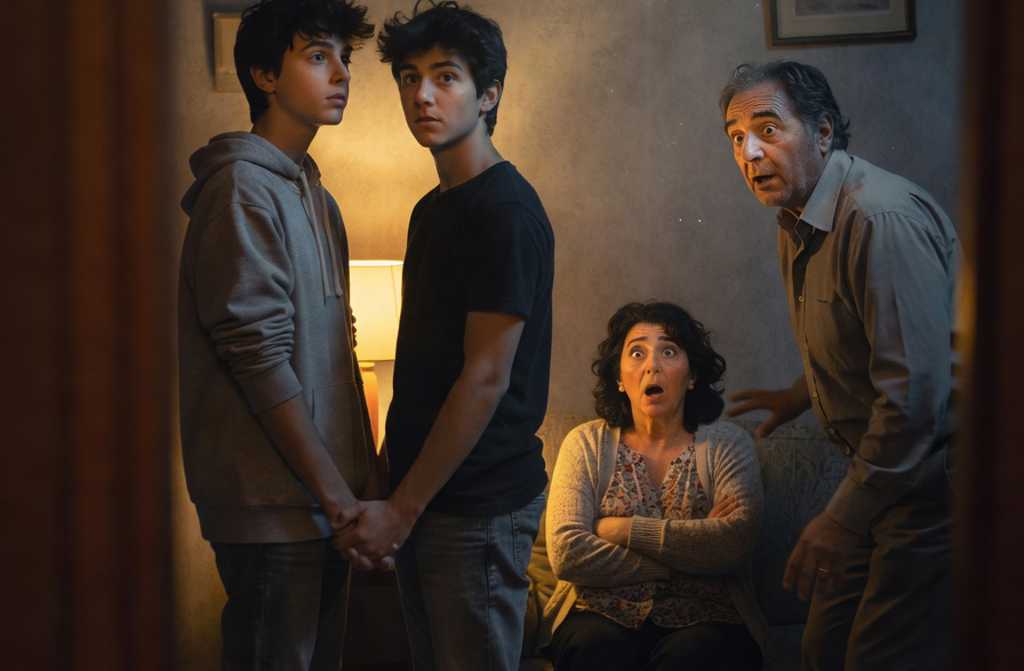
The evening we confronted them arrived: “Mamma, papà, we must discuss this seriously,” we declared firmly before them. We had awaited an evening when both were present and entered the living room resolutely. I clutched Matteo’s hand tightlyit helped sustain my resolve. “But first promise to hear us fully before sharing your views.” Papà lifted his gaze from his phone, astonished. Mamma, arranging items on the sofa, straightened abruptly. Her face registered disbelief, as though we had uttered something inconceivable. “This stems from your upbringing!” she huffed, arms folded. “The children now impose terms on us! As if we must account to them!” “And who speaks thus!” papà retorted hotly, setting aside the phone. “I am ever at work striving to support the family. You remained with them constantly! What did you impart? Why do they now dictate?” We glanced at each other. We anticipated this shift into familiar mutual accusations. Yet retreat was impossible.
“Stop!” I cried, nearly tearful. I advanced a step, endeavoring to speak plainly and steadily though my insides quaked. “Matteo and I have reflected and concluded you must divorce.” Silence enveloped the room instantly. Mamma stood frozen, mouth agape, while papà rose slowly from the sofa. “What tidings!” her voice turned menacing. “Giulia, you remain too young to instruct adults on living! And what else have you ‘concluded’? Perhaps divide the apartment for us as well?” “If you refuse to divorce, we will approach social services,” Matteo asserted, gripping my hand as though drawing fortitude. His tone held firmness, though inwardly he doubted the full weight of his words. “Then, papà, you could lose your position. Your firm frowns on scandals, correct? You mentioned reputation means everything.” “And you, mamma,” I went on, meeting her eyes directly, “will lose neighbors’ respect. They will cease speaking with you! All know your shouts at each other, and we can supply details!” “They threaten us! Behold them!” mamma finally managed, glancing between us. “These are our children! How dare you treat us so?” “We issue no threats,” Matteo said quietly yet assuredly. “We merely wish you to grasp: this existence cannot continue. We are exhausted! Worn from the yells, from your deafness to us, from requests turning to scandals.”
“You will divorce, separate, and we will reside with nonna,” we concluded together, rehearsed beforehand. “This suits all: calm for us, freedom from conflicts for you. We refuse to remain caught between you, amid the crossfire.” The parents stilled. For the first time in ages they lacked replies. Ordinarily such talks sparked immediate arguments, interruptions, blame-seekingbut now both appeared struck dumb. Their thirteen-year-old children acted wholly unexpectedly! Matteo and I stood adjacent, hands linked, regarding them steadily without usual shyness. We addressed grave matters the adults themselves avoided pondering. The couple had mulled divorce repeatedly. Yet one query always halted themwho would keep the children? Dividing twins seemed unthinkablewe were profoundly close, shared all activities, bolstered one another. They could not envision severing us, compelling separate homes and weekend-only sightings. The notion of nonna had never crossed their minds earlierperhaps from absorption in grievances and claims. Now hearing our proposal, they pondered: might this be the solution? Nonna adores us, possesses ample space, welcomes us always… Perhaps it would resolve part of the issues?
“I will ring mamma,” papà finally muttered through gritted teeth. His voice emerged thick, words emerging with effort. “If she consents…” He could not finish. Mamma cut in sharply, her tone laden with fatigue that startled even her: “Then we will at last cease tormenting one another. Call her. I will rejoice at not seeing your face daily.” Her words lingered. She had not intended such bluntness, yet years of stored hurts and letdowns unleashed them. “And I will be equally pleased!” papà answered, veiling his pain from her words behind irony. No rage colored his replymerely a bitter twist at their family’s transformation. He withdrew his phone and slowly entered his mother’s number. During the rings both avoided glances, sensing perhaps a threshold had been crossed.
That day the Rossi family reached a pivotal choice. It began with papà’s extended talk with his mother. Nonna Lucia listened closely without interruption, interjecting only occasional questions for clarity. When he concluded, a pause followed. She inhaled deeply and stated: “If you both see this benefits the children, I agree. They will be secure here, and I will look after them.” By evening the couple convened in the kitchenfor the first time in ages absent yells or reproaches. They sat facing each other and reviewed particulars. Step by step they aligned: divorce represented the sole sensible exit. We would shift to nonna’s, with monthly transfers in euros for our upkeep. Neither intended abandoning us. Both vowed weekend visitsyet staggered days to limit their encounters. “I will arrive Saturday mornings to take them for outings, you on Sundays,” papà said wearily, earning her nod. “This simplifies matters. Chiefly, the children must not feel forsaken.” Their aim centered on minimizing contact to avert fresh clashes. They pledged against discussing one another before us, avoiding recruitment to sides, and refraining from disputes in our presence.
“We remain their parents,” papà noted. “And must continue as such, even without being spouses.” Time proved the choice sound. We could finally unwind and live as typical teens. I enrolled in a drawing groupI had longed for it, yet prior worries left no room. Matteo took up football, gaining teammates as friends. We resumed shared time: city strolls, cinema outings, school talks free from sudden scandals. Academic steadiness returned too. Quiet study space emerged, free of distracting yells. Assignments proceeded without strain, promptly lifting grades. Instructors observed: “You have grown so focused, children! Maintain this!” Life settled into a fresh rhythmnot flawless, yet steady and foreseeable. We ceased retreating to our room, ceased startling at raised voices, ceased fretting over each action. We simply existedas teens ought, fortunate to locate anchorage amid hardship.
Five years on, as I reflect in this entry, the Rossi family’s days proceeded evenly and tranquilly. Matteo and I had adapted fully to the pattern: academics, activities, friend gatherings, cozy evenings with nonna. Parents persisted in alternating visitseach their designated day, bearing gifts and focus, yet without recriminations. Over those years they mastered restrained, courteous exchanges, absent prior anger flares. Their initial direct meeting as former spouses came at our graduation celebration. The school hosted a formal night, and both attended. They maintained distance initially, seated apart in the hall, yet ice gradually thawed. As dancing commenced, papà approached mamma unexpectedly: “Shall we dance? Recall old times.” She delayed briefly before nodding. Post-event they lingered in the school courtyard, observing graduates revel by the fountain. Talk arose naturallyfirst about us, then the past. They conversed extensively, evoking joyful marriage moments and conducting themselves respectably. They avoided old wounds, focusing on the positive that once united them. Watching from afar, we twins could not contain our delight. Still, it pained us to witness our closest kin treat each other nearly as foes.
Yet thunder erupted from clear skies. The following day they summoned us to a café. Over tea, exchanging looks, they clasped hands, and papà beamed widely: “Children, mamma and I have considered and resolved to wed again. These years showed our feelings endure! We love each other still and seek to reunite as family.” His voice rang joyful, as though sharing life’s peak news. Mamma glowed, anticipating enthusiasm. We met eyesour expressions clouded instantly. Doubt flickered in mine; Matteo’s fists tightened beneath the table. Again the same errors! What occupied our parents’ minds? Could they coexist without clashes? “Do you mean it?” I managed. “Completely,” papà affirmed. “We have both evolved. Learned mutual listening. We wish our family another opportunity.” Silence held us. Conflicting emotions churned: we yearned to trust real change, yet dreaded reliving prior pain. Still, we offered no dissuasion. We withheld comment on the announcement, deeply wounding them. Mamma regarded us bewildered: “You are not pleased? We expected joy for us.” We merely glanced and shrugged. What could we utter? “Do not! Do not wreck your lives”? Words lodged. We avoided seeming unfeeling, yet could not feign perfection. Conversation lagged till parting. They outlined plans; we nodded politely, minds elsewhere. En route home I murmured to Matteo: “I hope they grasp their actions.” He sighed only…
“So we head to the capital?” I opened my laptop to scan university pages. “Away from this chaos. I envision how this spectacle concludes!” “We go, of course,” Matteo declared resolutely, his voice bearing mature weariness. He passed a hand over his hair, shedding the weight of recent months. “They may endure peacefully a month, at most two. Then anew: yells, slammed doors, accusations… I refuse further hostage status to their bond. I dread each dawn guessing their mood and which of us faces the next barrage of grievances.” He rose and roamed the room, idly gathering books. One thought looped: why do adults, meant as wisdom’s models, act as erratic youths? Why repeat mistakes instead of resolving issues? “We must depart,” he repeated, pausing by the window. Dusk descended outside, tinting the city soft orange. He gazed afar, seeking his future. “Far. Distant enough their quarrels cannot touch us. Let them manage alone. We are no longer their counselors, mediators, or shields. We possess our life, our aspirations, and I will not permit another parental spiral to shatter them.”
“When do we apply?” I inquired evenly. “Tomorrow,” he replied promptly. “To forestall second thoughts.” I nodded silently, eyes on the screen. Capital university sites scrolledprograms, dormitory conditions, post-grad prospectsstudied for a week. My notebook brimmed with lists: each option’s merits and drawbacks, required papers, deadlines, admissions contacts. “Chiefly study undisturbed, ignoring their disputes,” I said softly, concluding my thoughts. “Fortunate we will be so removed.” “Precisely,” Matteo concurred, settling beside me. He leaned in, scanning lines. “When they resume blaming, we will not even hear. Let them phone, lament, summon us to ‘family talks’we abstain. Their wish to ‘grant relations a second chance,'” he smirked ruefully, “remains their decision, not ours.” They proceeded with the second wedding nonetheless. This time they opted against grandeur: no extra costs, no spotlight, and truthfully no desire for spectacle. A simple comune ceremony and intimate dinner with closest kingrandparents, a few friends, ussufficed.
Photos captured genuine happiness: smiles, hand-holding, tender looks. Interlaced fingers, soft gazes, gentle contacts appeared. Grievances seemed erased, separation years beneficial, futures bright. Viewing them, we pondered: perhaps this time differed? Yet no. Initial weeks post-wedding passed peacefully: attentiveness grew, thanks abounded, trifles ignored. Old patterns resurfaced gradually. After a month raised voices returned. Restrained barbs firstquiet yet sharp: “You neglected cleanup again?”, “Why omit warning of delay?”, “You might assist, being home.” Open clashes followed. Spats over nothings: damp towels in the bath, forgotten bread, loud television… Words sharpened, voices amplified, quarrel gaps narrowed. After two months, as foreseen, tension peaked. One evening a groceries dispute escalated wildly. Papà hurled a cup at the wall in furyit shattered loudly, fragments scattering. Mamma seized a plate, flinging it floorward forcefully. Breaking china rang through the rooms.
Such scenes prompted calls to us invariably. Each began identically: one dialed post-quarrel, breath short, unloading grievances. “Imagine his words today?” mamma would weep upon my answer. “He makes no effort to understand me!” “Son, grasp my sideshe lacks all control,” papà would tell Matteo agitatedly. “I strive, truly, yet she hunts excuses!” We had mastered gently yet firmly curtailing these outpourings. No longer did we engage lengthy debates or assign blame. Replies stayed brief and resolute. “Mamma, I am in class, will ring later,” I would say calmly, eyeing the clocktwenty minutes to lecture, yet no wish for another rant. “Papà, urgent work calls, discuss this weekend,” Matteo would reply, screen-focused. He knew allowing full vent extended talks an hour, plus subsequent soothing. “Later” and “weekend” deferred repeatedly. Excuses arosestudies, side jobs, friend meetupsand parental calls dwindled. No guilt accompanied this: we safeguarded nerves and hours, aware we could not alter their dynamic.
Our existence thrivedfull, purposeful, distant from their dramas. Days comprised personal concerns, passions, and schemes, not awaiting wall-side clashes. I immersed in psychology studies. Unraveling the human spirit, motives for actions, aids for the troubled appealed. Third year brought volunteering at a center for teens from troubled homes. I guided groups, aiding expression of feelings and exits from binds. Echoes of our past appeared in themI strove to offer what I once missed: attention, backing, being heard. Matteo discovered IT. Programming captivated from early yearsthe code’s logic, system creation, complex puzzle-solving. Hours at screens, new languages, student contests followed. Fourth year his team placed third regionally in mobile app developmentthis bolstered him, affirming direction. Part-time at a small IT firm came, where responsibility and skill shone. Real projects taught colleague interaction, time management, unconventional solutions.
We plotted futures free of their storms. I envisioned my practice aiding families’ harmony. Matteo considered his venture. Plans unfolded over café coffee, schemes drawn, ideas noted. In those instants we sensed support. A path. A life ours alone. When they sought to entangle us anewtearful calls detailing woes and mutual incomprehensionwe responded calmly and steadily. Advance discussion shaped our approach to avoid collapse or intermediary relapse. “Enough, dear parents, resolve it yourselves,” I stated firmly. “Your life is yours, ours is ours.” “But you are our children!” mamma wept. “You must back us!” “Had you acted normally, not as children, support would come,” Matteo countered. “Remarrying erred, and you persist in mutual torment. Coexistence in one space fails you, so why prolong suffering? Separate and part already.” These words might strike harsh, yet we sought only calm.
As I close this entry, the weight of these recollections lingers, yet so does quiet resolvewe carved our path forward, scars and all.